
3 hr
Old Montreal Food & Drink Walking Tour
Savor authentic Québécois flavors on a 3-hour culinary journey through historic cobblestone streets
Reserve
Hand-picked by our editors — only the best 5 culinary experiences from 42 reviewed.
Verified partners for every tour, free cancellation where available, and instant confirmation on every booking.
3 hr
Savor authentic Québécois flavors on a 3-hour culinary journey through historic cobblestone streets
Reserve
2 hr
Explore cobblestone lanes and French-inspired architecture with a certified local guide
Reserve
2 hr
Intimate 2-hour exploration of historic Montreal with certified local guides, limited to 10 guests
ReservePrices from verified partners. Availability updates in real time at checkout. Free cancellation policies apply where shown.
The landmarks, rooms, and views travelers on this tour remember — all visible on a single visit.
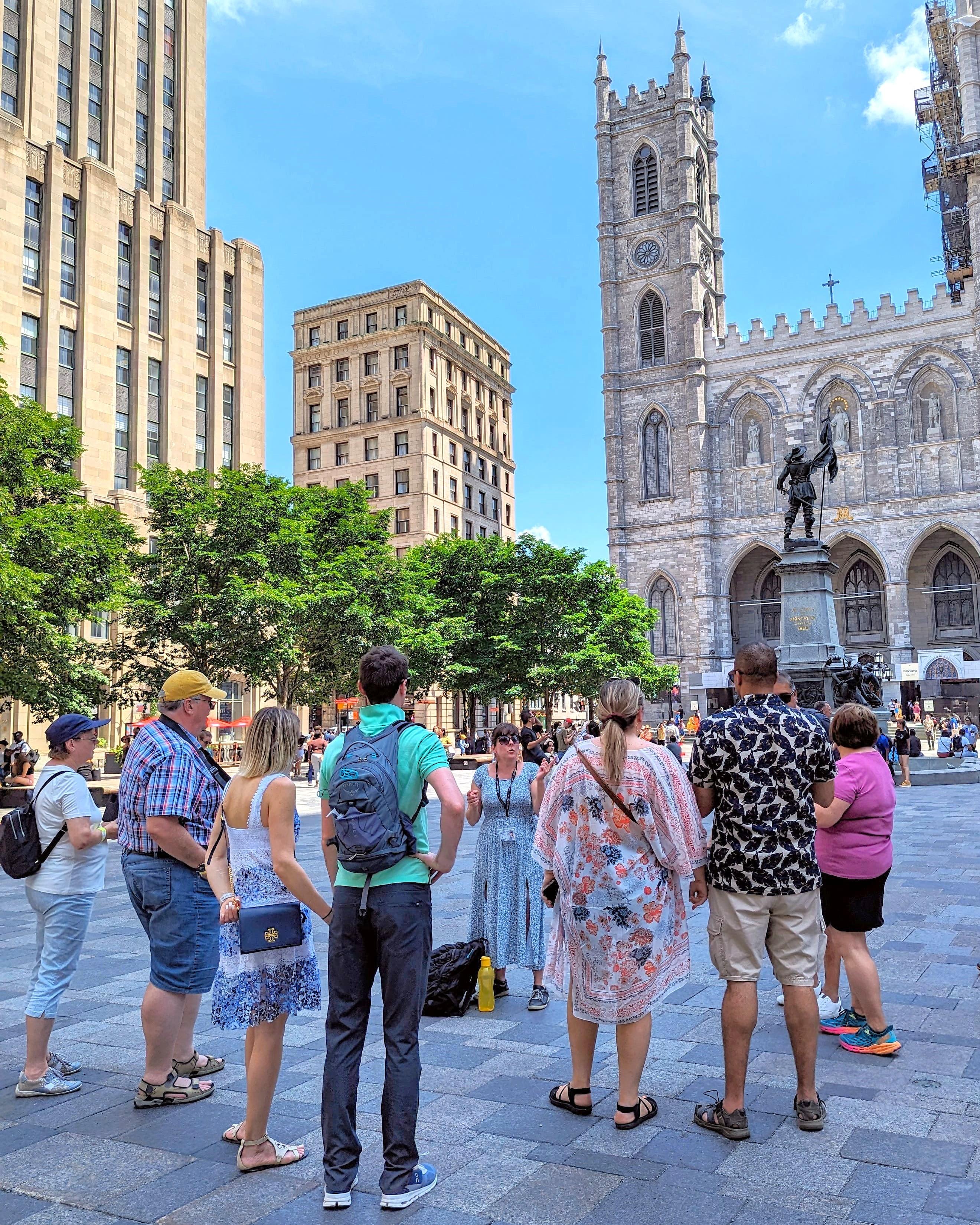
A historic square featuring the towering Notre-Dame Basilica and monuments to the city's founders.
A masterpiece of Gothic Revival architecture that serves as one of the city's most significant cultural landmarks.
The oldest street in the city, known for its well-preserved cobblestone paths and 17th-century heritage.
A vibrant waterfront area offering scenic views and a hub for historic city activities.
An architectural gem repurposed into a modern café, often the starting point for culinary tours.
They complement each other; most visitors who prioritize classic European architecture and cobblestone streets find the old montreal food walking tour more atmospheric, while those seeking avant-garde local flavors prefer the Mile End option.
| Feature | Top pick Old Montreal Tour | Mile End Tour |
|---|---|---|
Neighborhood Vibe |
Historic European charm | Artistic hipster enclave |
Primary Culinary Focus |
Refined classic gastronomy | Artisan bagels and bakeries |
Historical Context |
17th-century heritage district | Post-industrial immigrant legacy |
Walking Terrain |
Uneven cobblestone streets | Flat residential sidewalks |
Typical Crowd |
History enthusiasts and couples | Foodies and trendy locals |
Best Time of Day |
09:00–14:00 | 09:00–14:00 |
| See tickets → |
Verdict: If you want to combine site-seeing with your meal, secure your old montreal food walking tour tickets; if your main objective is tasting local cult favorites, opt for the Mile End culinary tour.
Choose your ticket, select your date, and reserve in under two minutes. Secure checkout handled by our verified partner.
Instant confirmation by email, with a mobile voucher you can save offline. No printing, no queuing at a collection desk.
Arrive at the entrance, show your voucher on your phone, and walk in. Most tickets include priority or skip-the-line access.
Practical details for your visit straight from our verified partners — hours, access, rules, and how to get there.
Comfortable walking shoes are essential for navigating the historic cobblestone streets. Dress in layers appropriate for Montreal's autumn weather.
Travel light, as secure storage for large bags is generally not available during the walking tour. Keep personal belongings close while navigating crowded areas.
Photography is encouraged during the tour, particularly at iconic architectural landmarks like the Notre-Dame Basilica and Place d'Armes.
Portions of the route involve uneven cobblestone paths which may present challenges for those with limited mobility. Please inquire with the specific operator regarding physical accessibility requirements.
The walking tour is family-friendly, though please note the walking distance and duration. Check with the operator regarding age-appropriate tasting portions.
The tour includes multiple food stops with generous tastings of local staples like poutine, bagels, and maple products. Advise the operator of any allergies or dietary restrictions at the time of booking.
Best time to go, insider tips, nearby landmarks, and the cancellation fine print — flip through to skim what matters to you.
Flexible, no hidden fees.
Cancel up to 24 hours in advance for a full refund. The entrance fee is 0 CAD as this is a service-based experience.
Old Montreal's narrow streets preserve four centuries of culinary lineage in eighteen city blocks. The district's first bakery opened on rue Saint-Paul in 1672, supplying bread to fur traders who arrived by canoe at the port below. Today those same cobblestones lead past stone façades housing third-generation charcuteries, nineteenth-century market halls converted to artisan chocolate ateliers, and bistros where cast-iron stoves still occupy corners laid in 1820. The quarter's food culture emerged from the collision of French colonial provisioning needs and the indigenous trade networks that predated European settlement. Montreal food walking tour experiences now trace that lineage through tastings at family-run fromageries, smoked-meat counters established before Confederation, and bakeries that revived wood-fired ovens dormant since the 1920s. The district's architectural fabric supports this continuity. Limestone warehouses built to store grain and molasses between 1830 and 1860 now house roasters who source single-origin beans and distillers producing spirits from Quebec grain. Narrow shop fronts, constrained by lot lines drawn in the seventeenth century, limit retail scale and preserve independent ownership. The result is a concentration of specialized vendors unmatched elsewhere in Montreal: maple syrup drawn from stands north of the Laurentians, raw-milk cheeses aged in cellars beneath rue Notre-Dame, and pâtés prepared according to recipes notarized in parish records. Old Montreal food walking tour tours operate year-round, adapting to the seasons. Autumn brings apple butter simmered in copper pots visible through bakery windows, while winter highlights tourtière and sugar-pie traditions carried forward from New France. Vieux-Montréal's culinary density reflects zoning decisions made in the 1960s, when heritage-protection bylaws froze building heights and restricted chain operations. The policy preserved not only façades but the economic conditions that allow small-scale food production to survive. A typical block contains a boulangerie producing sourdough from levain maintained since 1948, a chocolatier hand-tempering ganache, and a traiteur preparing cassoulet in fifteen-litre batches. Guided culinary walks connect these independent operators, who otherwise rely on neighborhood foot traffic. The tours typically cover eight to twelve stops across a three-to-four-hour route, concentrating on the triangle formed by rue Saint-Paul, boulevard Saint-Laurent, and the old port esplanade. Participants sample products tied to specific terroir: cidre de glace from Montérégie orchards, wild-game rillettes, and buckwheat crêpes recalling Breton migration patterns. This is not a food hall or curated market but a functioning commercial district where provisioning and tourism coexist on the same sidewalk.
"Limestone warehouses built to store grain and molasses between 1830 and 1860 now house roasters who source single-origin beans and distillers producing spirits from Quebec grain."
A step-by-step walkthrough of the visit — what you'll see, how long each stage takes, and the details that matter.
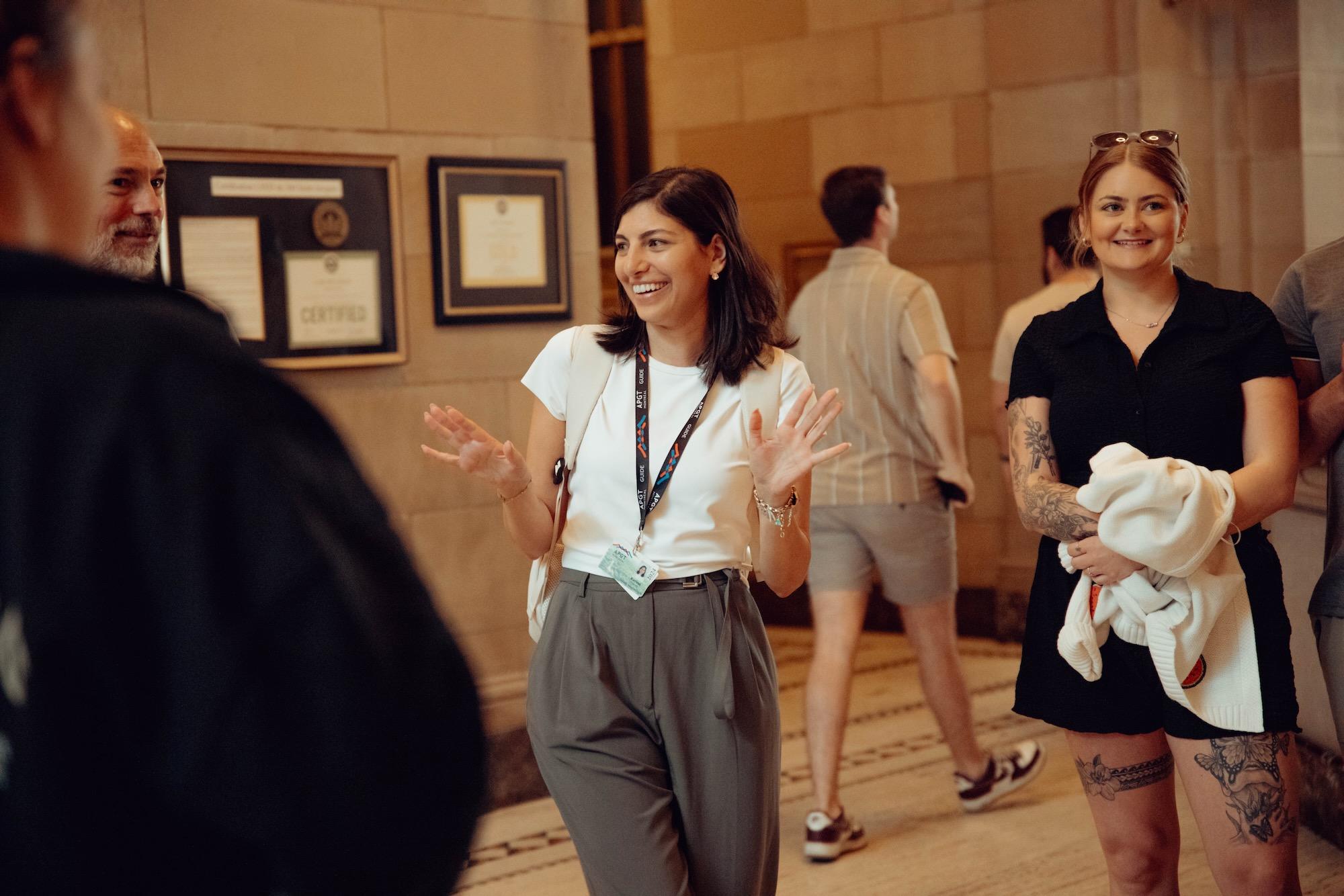
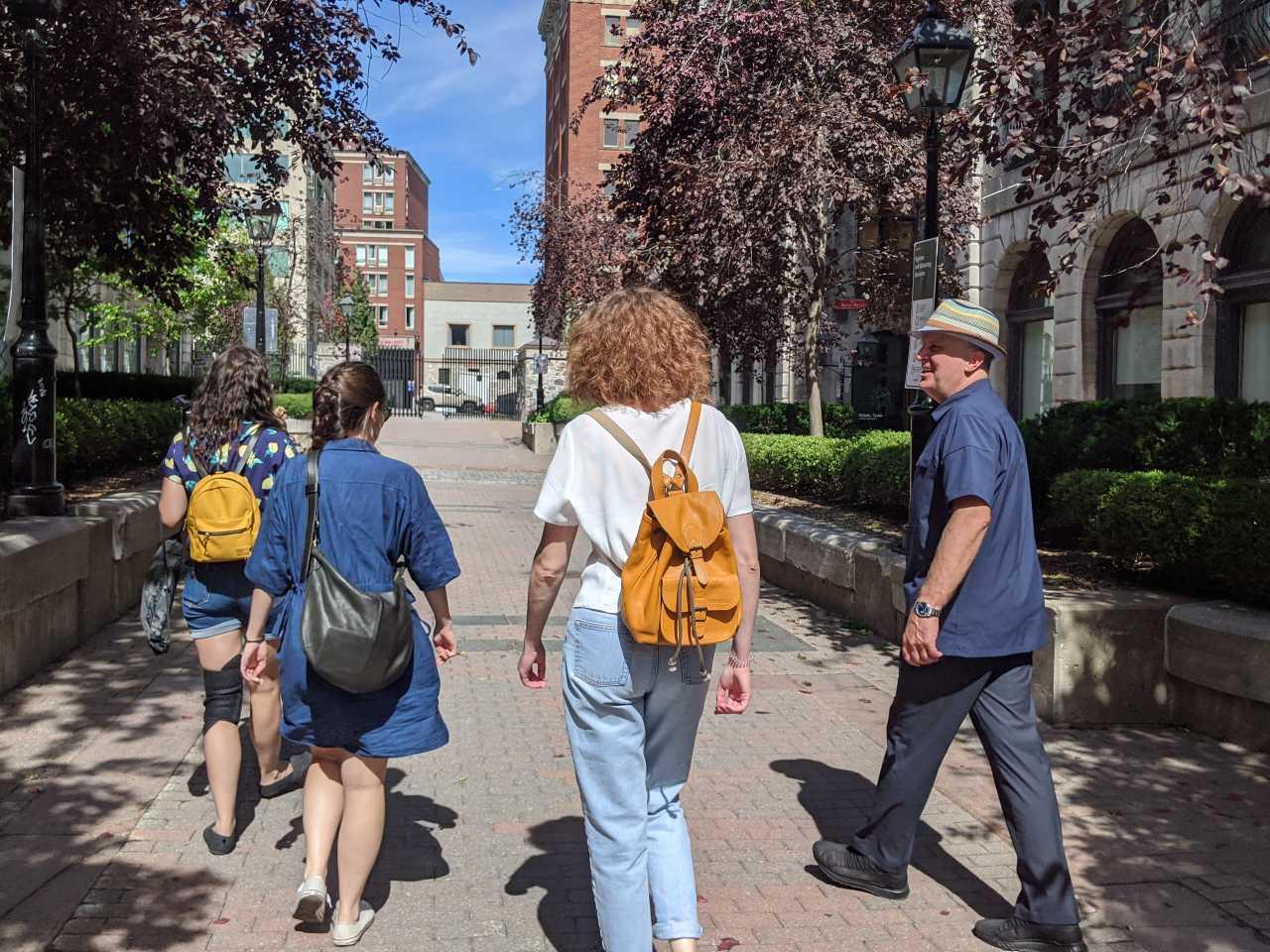
You meet your guide at the corner of rue Saint-Paul and place Jacques-Cartier, where the morning light angles across grey limestone façades. The first stop is a fromagerie occupying a stone cellar dug in 1798. You descend six steps, and the temperature drops. The guide slices a wedge of raw-milk cheddar aged fourteen months, explaining the farm sixty kilometers north that supplies the milk. You taste it with a spoonful of onion confit prepared that morning. You continue west along rue Saint-Paul, pausing at a charcuterie where cured sausages hang in the window. The proprietor, third-generation, offers samples of duck rillettes and pork terrine. You learn how the spice blend reflects both French and Quebecois traditions. Two blocks farther, you enter a chocolate atelier housed in a renovated warehouse. The chocolatier demonstrates tempering technique, then hands you a square of seventy-percent dark chocolate infused with maple and sea salt harvested from the Gulf of Saint Lawrence. The tour shifts to rue Notre-Dame, where you sample smoked meat at a counter established in 1932. The guide explains the fourteen-day brine and the Quebec hardwood used in the smoker. You finish at a bakery on rue de la Commune, tasting a slice of sugar pie still warm from a wood-fired oven installed in 1910. The crust is three millimeters thick. You walk back past the old port, the scent of burnt sugar and rye bread lingering.
The service operates daily from 09:00 to 17:00. Please schedule your arrival between 09:00–14:00 to enjoy the best access to food vendors.
While the tour covers historic areas, the cobblestone streets may be difficult for some. Please confirm mobility needs with your operator.
Morning and early afternoon tours are recommended to maximize daylight and food availability.
Yes, families are welcome, though participants should be prepared for a three-hour walking duration. Check with the provider for specific age-based pricing.
You may cancel your booking up to 24 hours before the scheduled time for a full refund. The entrance fee is 0 CAD.
Most tours last approximately 3 hours, allowing for multiple food stops and cultural commentary.
Typical landmarks include the Notre-Dame Basilica, Place d'Armes, Saint-Paul Street, and the historic Old Port.
No, you do not need to bring your own food; the tour provides generous tastings at multiple stops. We recommend eating a light meal beforehand.
The best way to reach the meeting point in Old Montreal is by métro or walking, as parking is extremely limited.
Yes, many operators offer private versions of their old montreal food walking tour by advance request.